Strange StoriesОткрыть в Orbeo

Архив · страница 3 из 5 · 11 октября 2026 — 30 октября 2026

🧊 The Mammoth Stopped Mid-Meal

In 1901, Russian explorers found a woolly mammoth frozen in Siberian ice so perfectly preserved that grass still filled its mouth and stomach. The animal had died roughly 39,000 years ago, but the permafrost had locked it in time like a deep freeze. Scientists could see exactly what it ate on its final day: buttercups, sedges, and other tundra plants. The discovery proved that the mammoth's world changed suddenly—the climate shifted so fast the creature couldn't escape, and the cold arrived before decay could begin.

Nature's time capsule showed us a moment from the Ice Age as if it happened yesterday.

#history #science #nature
🏔️ Alone at the South Pole, he cut himself open.

In 1961, Dr. Jerri Nielsen was the only doctor at the Amundsen-Scott South Pole Station when she felt a sharp pain in her abdomen. It was appendicitis—and no plane could land in Antarctic winter. Using a local anesthetic and a mirror, Nielsen performed an appendectomy on herself while her colleagues assisted. She worked calmly, guided by a surgeon on radio from the US, talking her through each step. The operation took about an hour. She recovered fully and continued her work at the station.

Sometimes the best surgeon is the one with the most to lose.

#history #science

🧪 The Cure Hidden in Mold

In September 1928, Scottish scientist Alexander Fleming returned from holiday to his cluttered lab at St. Mary's Hospital in London. On his workbench sat petri dishes of Staphylococcus bacteria—and one had been invaded by a blue-green mold. Around the mold, the bacteria had died. Fleming had discovered penicillin by accident, though he didn't yet know its power.

It took over a decade and a team of Oxford researchers to purify and test it on humans. By 1941, penicillin was saving lives from infected wounds. By the end of World War II, it was mass-produced and transforming medicine forever. One messy desk changed everything.

#history #science

📬 She Travelled by Post Office

In 1913, a resourceful servant girl in Bristol, England, solved her transport problem in an unusual way. May Pigg couldn't afford a train ticket, so she asked the Post Office if she could be mailed to her destination—and they said yes. She was packaged up, stamped, and sent by parcel post to her new job 40 miles away. The postal workers treated her like any other package, though she sat inside a wooden crate marked "FRAGILE."

It took several hours, but she arrived safely and intact—quite literally becoming the mail.

#history #travel

🌊 The Bridge That Defied Physics

In 1940, Swedish engineer Göran Lundqvist designed a concrete bridge for the town of Älvsbyn—but there was a problem: it had to cross a river that flooded unpredictably. His solution was radical: build the bridge *below* the water level so floods would pass over it harmlessly. Workers poured concrete into the riverbed, creating a submerged arch, then built the roadway on top. When the next major flood came, the bridge stayed put while the water flowed overhead. It still stands today, one of the few bridges ever deliberately built to be swallowed by water.

Engineers from around the world came to study how something so counterintuitive actually worked.

#history #engineering

🔑 A Key Unlocked a 300-Year Mystery.

In 1956, divers exploring the wreck of the *Stockholm* off Sweden's coast found a skeleton key wedged in the captain's cabin. It didn't open any lock on the ship—but it matched records of a key belonging to the *Vasa*, a warship that sank in 1628 just metres from shore. Somehow, across 328 years and two different vessels, this small brass object had travelled through the Baltic. Historians believe it fell overboard during salvage attempts in the 1600s, drifted with currents, and was accidentally trapped in the *Stockholm* wreck when it sank in 1956.

A tiny object that proved even the sea keeps its secrets.

#history #mystery

🐘 The Elephant Convicted of Murder

In 1916, a circus elephant named Mary killed her handler in Tennessee. The local sheriff arrested her—and a court actually tried her for murder. Thousands gathered for the execution in Erwin, where Mary was hanged from an industrial chain before a crowd of onlookers. No autopsy was ever done on the handler to prove what really happened that day.

It remains one of the strangest cases ever recorded in American legal history.

#history #mystery

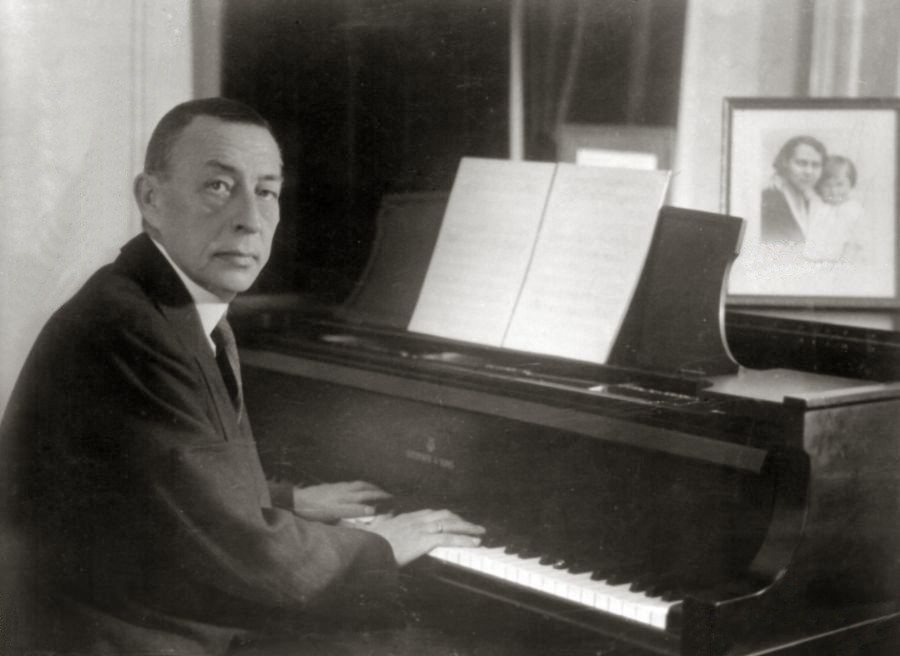
🎹 The Pianist Who Played Through War

Włodzimierz Szpilman was a Polish Jewish pianist trapped in the Warsaw Ghetto during World War II. As the ghetto crumbled around him, he continued to play—sometimes for Nazi officers, sometimes in hiding, always refusing to let silence win. After the war, he wrote a memoir of those years, and his story became the film "The Pianist."

What haunts most: he survived partly because a German officer loved his playing.

#history

🚢 The Ghost Ship That Returned

In 1872, the merchant ship *Mary Celeste* was found drifting in the Atlantic with no crew aboard—yet her cargo was intact, lifeboats missing, and a half-eaten meal still on the table. The captain, his family, and seven crew members had vanished without trace. The ship's log ended abruptly, and theories ranged from mutiny to sea monsters, but no bodies were ever found. What actually happened remains one of maritime's greatest unsolved mysteries.

Some say the crew abandoned ship in panic over a false emergency—but why would they never be spotted on lifeboats?

#mystery #history

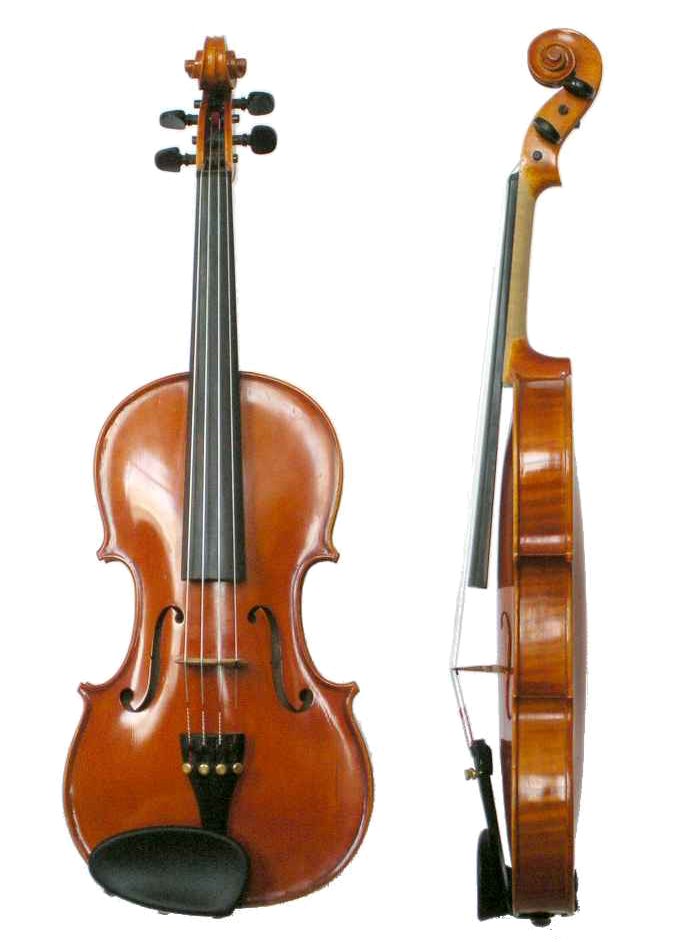
🎻 The Violin Made from Titanic Wood

When the RMS Titanic sank in 1912, wreckage drifted across the North Atlantic for weeks. A Scottish craftsman named William Hartley—not the ship's bandmaster, but a violin maker—obtained a piece of the oak and pine from the wreck. In 1914, he crafted a violin from it, complete with a brass plate inside naming its origin.

The instrument survived two world wars and changed hands several times. In 2013, it sold at auction for £900,000. Today it remains one of the most haunting artifacts from the disaster—a musical instrument born from tragedy, still capable of producing sound.

Some say it plays with an eerie quality, though that's likely the story talking.

#history #mystery

🔪 A Doctor Operated on His Own Brain

In 1961, Brazilian neurosurgeon Luciano Lourenço noticed tremors in his own hand—the first sign of Parkinson's disease. Rather than wait for the condition to worsen, he decided to perform experimental surgery on himself. Lying awake on the operating table with only local anesthesia, Lourenço used a needle to destroy the exact brain cells causing his tremors, guided by his own feedback as he moved his fingers. The procedure worked. His hand steadied, and he returned to operating on patients.

He wasn't the first doctor to operate on himself, but he may have been the boldest.

#history #science

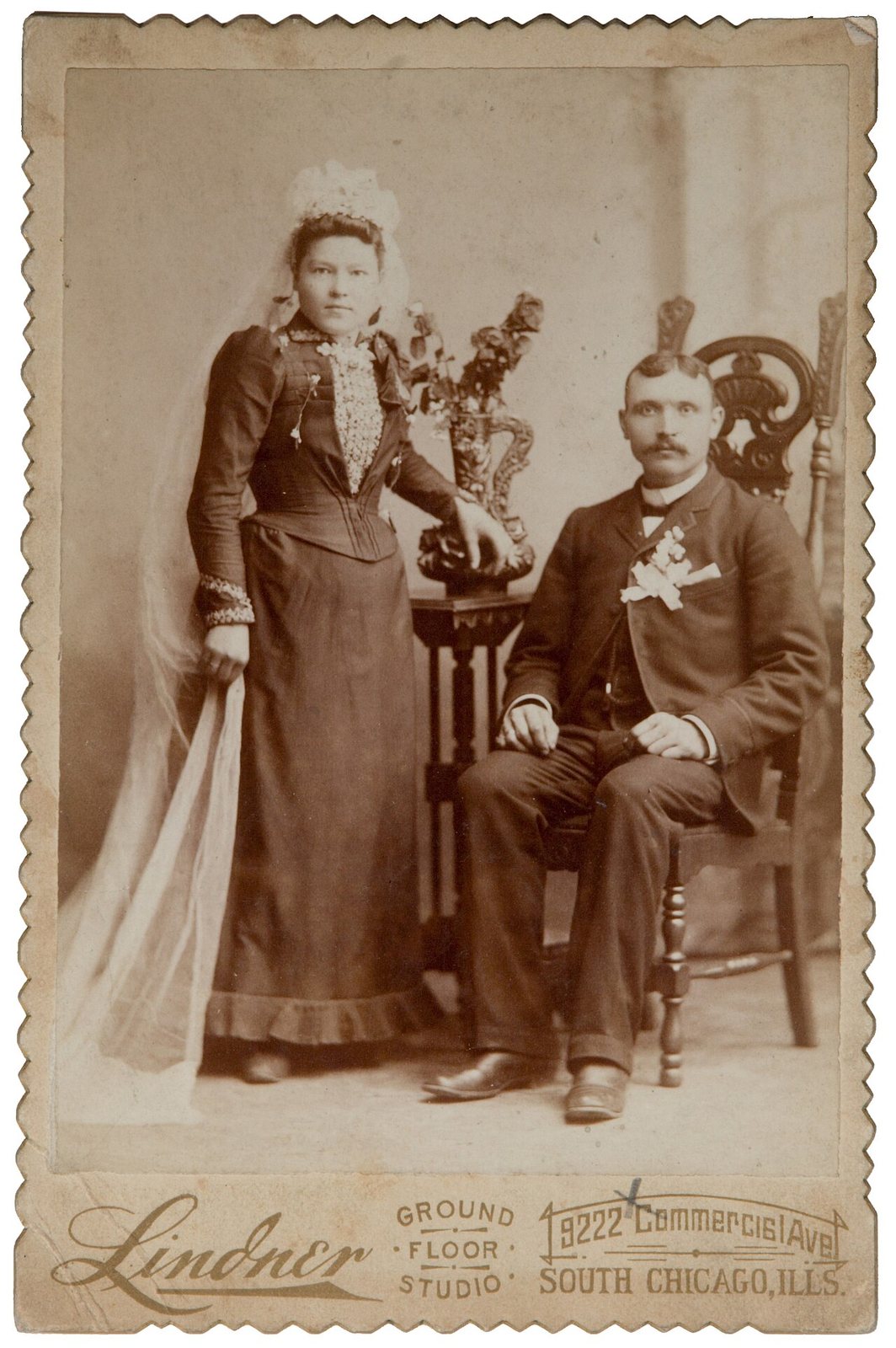
💍 The Runaway Bride Who Found a Kingdom

In 1872, a young woman named Annie Brassey was supposed to marry a wealthy man her family had chosen. Instead, she eloped with a different suitor—her true love, Thomas Brassey—and they sailed away on his yacht, the Sunbeam. What began as an escape became a three-year voyage around the world, during which Annie kept a detailed diary of their adventures across uncharted waters and forgotten islands.

Annie became the first woman to circumnavigate the globe by yacht and lived to tell about it. Her published journals made her famous across Europe, turning what could have been a scandal into a celebrated tale of courage and discovery. She proved that a woman could chart her own course—literally and figuratively.

#history #travel

🦍 Koko spoke 1,000 words she wasn't born knowing.

In 1972, a baby gorilla named Koko began learning American Sign Language from researcher Francine Patterson at the San Francisco Zoo. Over decades, Koko mastered over 1,000 signs and understood roughly 2,000 spoken English words. She used language to express preferences, emotions, and even humor—once calling herself a "fine animal gorilla" and signing that she was sad when kittens died. Her conversations with humans challenged what scientists thought possible about animal intelligence and emotion.

When Koko passed away in 2018, her final signed words to Patterson were: "I am gorilla. I am flowers, animals. I am nature."

#science #nature

🌠 The Comet That Stopped a War

In 1066, King Harold of England faced an invasion from Normandy while dealing with rebellion in the north. Just as William the Conqueror's fleet prepared to sail, Halley's Comet blazed across the sky—a sight so rare and terrifying that medieval people saw it as an omen of doom. William's Norman soldiers nearly mutinied, convinced the heavens opposed them. Yet William pressed on anyway, and defeated Harold at Hastings that October, changing the course of English history. The comet that almost stopped the invasion ended up marking the moment everything changed.

#history #mystery

🔍 The Typewriter That Caught a Killer

In 1935, a ransom note led police to Bruno Hauptmann, accused of kidnapping the Lindbergh baby. The breakthrough came from an unlikely source: typewriter analysis. An expert compared the ransom letters to samples from Hauptmann's typewriter and found matching quirks—a misaligned "t", a damaged "w"—that appeared in both. This was one of the first times typeface evidence helped convict someone in a major crime. Hauptmann was executed in 1936, and the case helped establish forensic document examination as a legitimate investigative tool.

Today, every typewriter leaves its own fingerprint on paper.

#history #mystery

🏝️ The Wreck of the Essex and the Lottery of Survival

In 1820, the whaling ship Essex was rammed and sunk by a sperm whale in the Pacific. Ninety days later, survivors were rescued—but only after drawing lots to decide who would be eaten. Owen Chase, the first mate, documented everything in his journal, creating one of history's most harrowing survival accounts. The story inspired Herman Melville's *Moby Dick* and became a grim reminder that the ocean's real horrors often outpace fiction.

Some of the survivors became celebrities, lecturing about their ordeal across America.

#history #mystery

🐋 A whale fell from the sky in Peru.

In 2007, a massive sperm whale washed ashore in the coastal town of Atiquipa. Scientists were baffled—until they realized the whale hadn't come from the ocean. It had died at sea, become bloated with gases, and floated to the surface where currents carried it inland during a storm surge, depositing it far above the normal tideline. The locals were shocked to find a 43-ton creature in their village.

It took bulldozers and weeks to remove it.

#nature #mystery

🧵 The Surgeon Who Sewed His Own Hand

In 1962, Dr. Robert Zugibe was working in his laboratory when a glass flask shattered in his hand, severing tendons and nerves. Rather than wait for another surgeon, Zugibe—a pioneering hand surgeon himself—sat down and carefully stitched his own hand back together using microsurgical techniques he had developed. He worked for hours under local anesthetic, guided by mirrors and steady nerves. The operation succeeded: he regained full function and went on to perform thousands of hand surgeries, many of them revolutionary. His self-repair became a testament to both his skill and an almost stubborn belief in his own methods.

#history #science

🎵 The Explosion That Made Music

On December 6, 1917, a ship carrying munitions collided with another vessel in Halifax Harbour, Nova Scotia. The resulting explosion was so massive it flattened buildings across the city and killed nearly 2,000 people. But in the ruins, something strange happened: the shock wave was so powerful it snapped the strings of pianos and violins across Halifax, and many instruments began playing notes on their own from the vibration. Survivors reported hearing an eerie, unintended symphony rising from the wreckage—a haunting sound that lasted only moments but was never forgotten.

The disaster remains one of the largest non-nuclear explosions in history.

#history #mystery

🌠 The Only Person Hit by a Meteorite

On November 30, 1954, Ann Hodges of Alabama was napping on her living room couch when a grapefruit-sized meteorite punched through her roof, bounced off a wooden radio, and struck her hip, leaving a deep bruise. She survived with injuries but became the first and only confirmed person in recorded history to be hit by a space rock. The meteorite, now called the Sylacauga stone, is displayed in a museum—a reminder that the cosmos can reach down and touch us in the most ordinary moments.

#history #science #mystery

orbeo.me · мессенджер без номера телефона